Mastering the Ollie: Techniques and Insights
Intro
Skateboarding is more than just a sport; it’s a culture, a lifestyle, and for many, it’s an art form. Among the multitude of tricks that skateboarders perform, the ollie stands out as a crucial cornerstone. Whether you're rolling through the local park or attempting to impress on a half-pipe, mastering the ollie is one of the first steps to elevating your skills.
In this article, we will dissect the art and technique of the ollie, exploring its significance not only within the mechanics of skateboarding but also its cultural weight. The ollie isn't just a simple trick—it opens the door to a variety of advanced maneuvers, allowing skateboarders to express their creativity. We will look into the necessary gear, common pitfalls, and training strategies that can help skateboarders at every skill level.
Skills and Techniques
The ollie is a blend of timing, balance, and precision. Performing it accurately will enable you to not only gain height but also to set the stage for executing more complex tricks.
Fundamental Tricks
Before tackling the ollie, it's advisable to be comfortable with basic riding techniques. Here are some foundational skills every aspiring skateboarder should focus on:
- Stance: Understand your natural stance—regular (left foot forward) or goofy (right foot forward).
- Pushing: Learn how to push off and maintain your balance while rolling.
- Carving: Master the ability to turn and control your skateboard smoothly.
Once you've solidified these basics, it’s time to dive into the ollie. Here’s how:
- Preparation: Ride your board comfortably, finding your balance and speed.
- Foot Placement: Position your back foot on the tail of the board and your front foot near the middle.
- Pop and Drag: Push down on the tail with your back foot while dragging your front foot upwards towards the nose.
- Jump: As you drag your foot up, jump off with your back foot to lift the board off the ground.
- Level the Board: Use your front foot to level it out, allowing you to land smoothly.
Advanced Maneuvers
Once you’ve got the ollie down, the world of advanced tricks becomes accessible. Here are a few popular moves that rely on a well-executed ollie:
- Ollie North: An ollie while lifting the front foot higher than the back.
- Ollie to Manual: Jump into a manual position (balancing on two wheels) directly after mastering the ollie.
- Ollie over Obstacles: Progress to ollieing over benches or ledges as you build confidence.
Mastering the ollie is not merely about height—it's about control and finesse.
Gear and Equipment
Having the right skateboard and accessories is fundamental to enhancing your skills. Below, we’ll outline essential components that can affect your ollie performance.
Skateboard Components
- Deck: Opt for a deck that fits your style and weight; a wider deck is generally more stable.
- Trucks: Pay attention to the quality and brand of your trucks; they influence how your board turns and rebounds during an ollie.
- Wheels: Softer wheels provide better grip, important for stable landings.
Essential Accessories
In addition to your skateboard, some accessories can improve your overall skateboarding experience:
- Grip Tape: Essential for preventing slippage during tricks. Replace it if it’s worn out.
- Helmet: Safety should be your priority. Wear a good-quality helmet.
- Pads: Knee and elbow pads aren’t just for beginners. They can protect you as you learn and expand your tricks.
For anyone looking to delve deeper into skateboarding culture and history, resources like Wikipedia and Britannica are excellent starting points for research. As you continue your journey with the ollie, engage with communities on platforms like Reddit or follow pages on Facebook.
Preamble to the Ollie
The ollie is no mere trick; it's the bedrock of skateboarding. Understanding how to perform this maneuver sets the stage for skills that can elevate a skateboarder from a novice to someone who can confidently tackle complex routines. This section immerses you in the fundamentals of the ollie, which serves as a gateway not just to mastering the sport but also to appreciating the broader culture surrounding skateboarding.
Definition and Importance
At its core, an ollie involves popping the tail of the skateboard off the ground while simultaneously dragging the front foot upward, allowing the board to rise with the skater. The necessity of mastering this move cannot be overstated; it’s the foundation that enables other more intricate tricks such as kickflips, heelflips, and 360 ollies. Without a solid ollie, attempting advanced maneuvers is like trying to build a house without a stable foundation. Every skateboarder, from the casual rider to those chasing professional accolades, must grasp this skill.
Furthermore, the ollie provides essential insights into timing, body mechanics, and balance. Successfully executing an ollie requires the skater to synchronize their movements, which hones their overall physical control. Mastering the ollie brings a sense of accomplishment that feeds a skater's confidence and passion for the sport.
Historical Context
Originating in the late 1970s, the ollie transformed skateboarding from a simple pastime into an artistic expression. This trick surfaced amidst a revolution in skating techniques, particularly by pioneers like Alan Gelfand, who is credited with the development of the ollie as it is known today. Before the ollie, skaters were limited to tricks that had their wheels on the ground, resulting in a largely one-dimensional experience.
The ollie ushered in a new era, where vertical movements became possible, allowing skaters to vault over obstacles and perform tricks in mid-air. This shift laid the groundwork for the street skating movement, which embraced urban environments as skate parks.
"The ollie was a game changer; it forever altered what was possible on a skateboard."
— Alan Gelfand
With the ollie, creativity flourished. Styles evolved to reflect the individuality of skaters, making it not just a trick, but a form of self-expression that resonated throughout skate culture. As we delve further into the art and technique of the ollie, the narrative will flow into the mechanics and nuances that define this pivotal movement, making it essential knowledge for anyone wishing to ride the waves of skateboarding.
Anatomy of an Ollie
Understanding the anatomy of an ollie is crucial for every skateboarder, whether they are just starting out or have years of experience under their belts. The ollie is not merely a jump; it is the foundation for numerous tricks and maneuvers that define skateboarding. Grasping the essential elements—like mechanics, weight distribution, and timing—can significantly enhance one’s ability to perform this trick effectively. This part of the article aims to distill these key components, offering insight into the art and technique behind the ollie.
Basic Mechanics
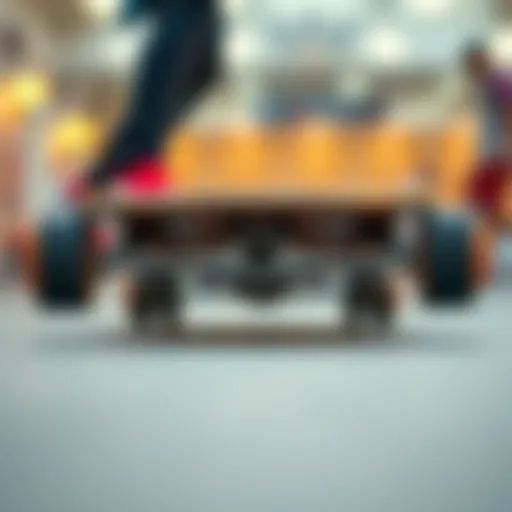
To kick things off, let’s break down the basic mechanics of an ollie. It begins with the pop, where the back foot applies pressure to the tail of the board. This action creates an upward thrust, lifting both the rider and the board simultaneously. Think of it like a spring compressing and then releasing.
Next, the front foot slides up the board, using friction to bring the nose up. This sliding motion is paramount because it not only helps in getting the board airborne but also contributes to the overall control of the trick. The simultaneous action of popping and sliding is what ultimately generates height and stability during the ollie.
The final piece in this mechanical puzzle is the catch. As the board reaches its peak, the rider must aim to land back on it, keeping both feet aligned over the bolts to ensure balance. Every component works together like a well-oiled machine, making the ollie an essential skill in any skater's repertoire.
Weight Distribution
Another critical aspect of nailing an ollie is proper weight distribution. Skaters often find that the location of their weight throughout the trick can make or break their success. Ideally, the weight should be centered over the truck bolts, particularly during the pop phase. Too much weight on the tail can lead to flooding the ollie, sending the board in an awkward angle or even crashing to the ground.
During the upward motion, as the rider’s front foot slides, there should be a gradual shift of weight forward. This shift helps maintain control and keeps the board level, allowing for a smoother landing. A good trick to think about is imagining that your legs and board are making a one-unit pivot—without this balance, the ollie can quickly turn into a catastrophe.
Common pointers for maintaining weight distribution:
- Keep your knees slightly bent for better suspension
- Stay relaxed in your upper body to maintain flow
- Don’t lean too far forward or backward
This thoughtful management of weight not only enhances the ollie but opens doors to more complex tricks that hinge on a solid ollie foundation.
Timing and Rhythm
Timing and rhythm play an unsung but significant role in executing a perfect ollie. Every skater knows that there’s a sweet spot where everything clicks. The rhythm involves a bounce of sorts; you pop the tail while your front foot slides—this harmony is what creates the upward motion, and it needs to be as natural as breathing.
Each element operates in sync, almost like a dance where the skater and the board are the pair. A skater must anticipate the right moment to transition from downward force to upward motion. The trick often falls flat due to poor timing; popping too late might result in insufficient lift, while being too early can send the board flying without the skater.
The best way to hone this timing is through practice. Repeating the sequence while focusing on the rhythm can help embed the timing into muscle memory. Skating with a metronome—yes, some skaters do this—might seem unusual but is a surprisingly effective training method to develop an internal sense of timing.
Emphasizing these elements—mechanics, weight distribution, and timing—will allow one to master the ollie, paving the way for more sophisticated tricks and immersive experience in the skateboarding world.
Essential Equipment for Ollies
When it comes to mastering the ollie, having the right equipment is like laying a solid foundation before building a house. Without the proper gear, you could be setting yourself up for failure before you even attempt that first jump. This section dives into the key components that contribute to successfully executing ollies on a skateboard.
Skateboard Specifications
The skateboard itself is the most fundamental piece of equipment you’ll need. Skateboards come in various shapes and sizes, and each can affect the performance of the ollie significantly. Here’s what to consider:
- Deck Width: A deck that's too wide or too narrow can throw off your balance. Wide decks offer better stability, while narrower ones might be easier to flip.
- Wheel Type: Softer wheels provide more grip, while harder wheels facilitate faster slides. A balance between grip and slide is essential for ollies.
- Trucks: These are the components that connect the wheels to the deck. A good truck setup allows for more controlled movements when popping the skateboard upwards.
- Hardware: Be sure to use high-quality bolts and nuts to keep everything secure. Rattling parts can lead to accidents or diminished performance.
For those keen on a solid ollie, paying attention to these specifications means you can tailor your skateboard to fit your individual style. The right configuration can make the world of difference when you’re trying to nail that perfect ollie.
Footwear Considerations
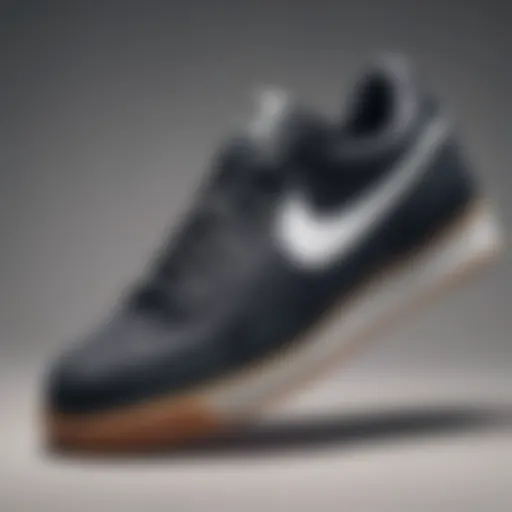
Your footwear plays a crucial role as well in making a successful ollie. The grip between your foot and the board can make or break your performance. Here are some footwear tips:
- Sole Material: Look for shoes that have a flat, grippy sole. A flat design helps you feel the skateboard and provides better control—think of it like having your foot glued to the board when you pop.
- Padding: While padding can offer comfort, too much can affect sensitivity. You want enough cushioning to keep your feet comfortable but not so much that you lose connection with the board.
- Lacing System: Opt for shoes with a sturdy lacing system that keeps your foot snug. A loose shoe can lead to mishaps during an ollie attempt, just as a well-fitted shoe helps maintain control.
In the skateboarding world, you’ll often hear the phrase,
Step-by-Step Guide to Performing an Ollie
The ollie is not merely a trick; it's a gateway to a world of skateboarding possibilities. Understanding how to execute this fundamental maneuver effectively is essential for anyone wishing to progress in the sport. With a well-executed ollie, a skateboarder can jump over obstacles, execute more complex tricks, and gain a deeper appreciation for the art of skateboarding. Here, we will break down the process into manageable steps to help you grasp the technique thoroughly.
Starting Position
Before anything else, establishing the right starting position is critical. Stand on your skateboard with feet placed shoulder-width apart. Your back foot should be on the tail, ready to pop the board, while your front foot rests near the middle or just above the front bolts. This positioning will allow you to maintain balance and control as you prepare for the ollie. Moreover, ensure that you are slightly bent at the knees, this athletic stance will give you the leverage you need.
It's also important to feel comfortable and adaptable at this stage. Adjust your foot placement if necessary — every skateboarder has a unique foot positioning that may work better for them. Remember that it is not just about the feet; your upper body also plays a role. Keep your head up and eyes forward to maintain focus on your landing area.
Pop and Slide Technique
Executing the ollie requires perfecting the pop and slide technique. Start by pressing down with your back foot to make contact with the tail of the skateboard. This action creates an upward thrust. The power generated from this popping action is what allows the board to lift off the ground. Your knees should be bending during this motion, loading the energy for the jump.
Once you've popped the tail, it's time to engage your front foot in the sliding motion. Move your front foot upward along the grip tape of the skateboard as you begin to jump. The slide is crucial, as it helps level the board beneath you. Aim to push the front foot slightly forward, which helps keep the board underneath your body while you elevate your center of gravity.
The synergy between the pop and slide creates the backbone of the ollie. It is in the timing and movements of your feet that magic occurs. If done right, you should find yourself soaring not just upward but vertically.
Catching the Board
The final component is — to put it simply — catching the board. As you reach the apex of your jump, bring your knees up towards your chest. This movement allows you to keep the board close and prevents it from getting too far beneath you.
Once you're airborne, immediately look down at your board. When you see it coming back down, use your feet to guide it back into position. You want to use both feet to land evenly on the bolts, distributing your weight appropriately to absorb the landing. As you touch down, your knees should still be bent to help mitigate the impact.
"The essence of mastering an ollie lies not just in flying high, but in the control and finesse of your land."
In summary, effective performance of an ollie hinges on mastering the starting position, practising the pop and slide technique, and confidently catching the board upon landing. Repeated practice will help solidify these steps and allow for personal adjustments that suit your unique style.
Common Mistakes and How to Avoid Them
The ollie is often seen as a rite of passage for skateboarders. Mastering it isn't just about popping the board off the ground; it's about incorporating the right techniques, positioning, and practice in order to make it second nature. However, many fly off the rails early in their training due to common mistakes. Recognizing and addressing these blunders can significantly enhance one’s ability to execute the ollie effectively, making this section a vital read for both novices and seasoned riders. Missteps, if gone unchecked, can hinder progress and even lead to frustration that may discourage a skateboarder altogether.
Incorrect Foot Placement
One of the most frequent pitfalls when attempting an ollie is poor foot placement. Riders often don’t realize how much their foot positioning can affect the outcome of their jump. A common error is placing the back foot too high up on the tail or too far back. When the back foot is too high, it can lead to a weak pop, while being too far back might cause a loss of control during the jump.
To avoid this mistake, skateboarding enthusiasts should adopt a stance where the rear foot is centered on the tail of the skateboard. This will maximize the leverage required to execute a potent pop while also ensuring balance is maintained. The front foot doesn’t get a free pass either—as it should be placed just behind the front bolts, angled slightly.
Another tip is to practice ollie drills. Set up markers on the ground to help gauge the correct distances for foot placement. This simple exercise increases muscle memory and helps reinforce the concept of optimal foot positioning during actual rides.
Insufficient Height
While executing an ollie, many riders find themselves settling for a lackluster jump height. Some often feel that popping the board off the ground is good enough. This approach might work for cruising around, but to truly nail tricks, achieving height is essential. Insufficient height can confine a skater to basic maneuvers and limit progression to more advanced tricks.
Achieving the right elevation begins with a powerful pop followed by a decisive slide motion. Riders should also focus on bending their knees before the jump to build momentum and spring. Visualizing the jump height is also an effective tool; one can practice ollies while focusing on an imagined target—for example, a light fixture or even a fence post. This mental cue can reinforce the physical action needed to elevate the board properly.
"It’s not where you start, but where you finish. In skateboarding, those early mistakes teach the best lessons for the big tricks ahead."
For more technical insights on skateboarding techniques, you can check resources like Wikipedia, and if you’re looking for community discussions, platforms like Reddit can offer a wealth of experiences from seasoned skateboarders.
Drills and Exercises to Improve Ollies
Practicing drills and exercises specifically designed to improve ollies can make a world of difference for skateboarders at any skill level. These exercises not only enhance the technical aspects of performing the stunt but also build the muscle memory necessary for consistent execution. They allow you to smooth out the action, making your ollies higher and more controlled. Moreover, regular practice helps you hone the coordination and timing that an ollie demands. Focusing on specific drills can clear up common mistakes and set you up for more advanced tricks down the line.
Balance Drills
Balance is a fundamental skill in skateboarding and particularly crucial for ollies. A solid balance helps maintain control while you pop and slide the board. Here's how to get in the groove:
- One-Legged Stand: Find a stable surface and try standing on one foot for extended periods. You might feel a bit wobbly at first, but that's normal. Switch legs often to develop your core stability.
- Skateboard Balancing: While stationary, practice balancing on your skateboard without moving. Hold the position for as long as you can, trying to keep your weight centered over the board. This exercise helps familiarize you with the feel of the board beneath you.
- Weighted Squats: Stand with feet shoulder-width apart. Hold dumbbells and do squats while keeping your back straight. This builds leg strength, which translates into better pops when you attempt your ollie.
These drills not only boost balance but also build the foundation that will enable you to execute ollies with more style and precision.
Pop Drills
The pop is arguably the most crucial part of an ollie. It determines the height and the controlled lift of the skateboard. Without a proper pop, the ollie can fall flat. Here are some specific pop drills to focus on:
- Flat Ground Pop: Start on flat ground with your skateboard. Practice popping the tail of the board straight down while keeping your front foot at the center. The idea here is to make the board bounce upwards without dragging it forward initially. The feel of the tail snapping will become familiar this way.
- Tail Grabs: Position yourself in an ollie stance but instead of just popping, grab the tail of the skateboard right after the pop. This not only gives you a better sense of timing but also helps improve your muscle memory for pulling the board underneath you.
- Jumping Pops: Stand beside the skateboard and jump off both feet onto the board, aiming to pop the tail as you land. This might look a bit ridiculous at first, but it ingrains the necessary motion into your mind and body.
Focus on these pop drills regularly to establish a consistent and powerful ollie. Practice makes perfect, and in this case, that’s the name of the game. By integrating these drills into your skate routine, you'll notice a marked improvement not only in your ollies but in your overall skateboarding prowess.
The Ollie and Its Variants
The ollie isn’t just a skill; it’s a jumping-off point for many other tricks in the skateboarding world. Understanding the variants of the ollie sharpens a skateboarder's technique and opens the door to more advanced moves. Each variant has its nuances, but they all share the same foundational mechanics that define the ollie itself. Mastery of these variants boosts a skater's versatility, allowing them to adapt to different styles and challenges.
Nollie
The nollie is essentially a front-foot ollie. Instead of using the tail of the skateboard to initiate the jump, a skater pops the board from the nose. This may sound simple, yet it requires a distinct shift in weight distribution and timing. The first step is to reposition your feet: your back foot goes near the tail (like a regular stance), while your front foot straddles the nose. Unlike the standard ollie, it’s vital to engage your core and legs similarly, ensuring a clean lift.
"The nollie often feels like skating backwards on a whole new terrain, pushing your brain to recalibrate what is possible."
The nollie is not just a variation; it can also serve as the foundation for other tricks, such as nollie flips or combining it with grinds. It challenges a rider to engage deeply with the board and its movements, allowing for fluid transitions between tricks.
Fakie Ollie
The fakie ollie, on the other hand, is executed while riding in a fakie stance, where the skater is rolling backward. This ollie variant utilizes the same popping motion from the tail. However, timing becomes more essential since you’re moving in the opposite direction. The back foot’s placement should be firm on the tail for maximum lift while your front foot remains relaxed over the board.
Skaters often prefer the fakie ollie for its smoothness and versatility. It creates a seamless connection between tricks and can lead into flips, spins, and grinds effortlessly. Maintaining balance while executing this trick opens up new pathways to explore the pavement.
Frontside and Backside Ollies
Frontside and backside ollies address the directional aspect of the ollie. A frontside ollie involves turning your body towards the direction you are moving, while a backside ollie entails turning away from that same direction. This distinction isn’t merely about orientation; it significantly affects how a skater feels on their board. Both types underscore the importance of rotations and body positioning.
Key Differences:
- Frontside Ollie:
- Backside Ollie:
- Body turns towards the skater's leading edge while lifting the board.
- Creates opportunities for stylish transitions into tricks like frontside 180s.
- Tricky for some, as it requires pulling your body and board in the opposite direction.
- This ollie variant allows for smoother landings into many combos, particularly landing back into grinds.
In mastering both frontside and backside ollies, skaters develop a well-rounded skill set that enhances trick combinations and styling on the board. Practicing these variants not only builds confidence but also expands the array of possible moves, making every ride distinctly personal. Understanding the variants of the ollie fundamentally alters the way one approaches skateboarding, infusing creativity and technique into every moment.
Cultural Significance of the Ollie
The ollie is not just a trick; it’s a symbol of freedom and creativity within the skateboarding sphere. This simplistic yet profoundly impactful move is considered a rite of passage for many skateboarders. Mastering the ollie often marks a beginner's transition into more complex tricks and techniques, cementing its role as a cornerstone in the skateboarder’s journey. It's the foundation upon which countless skateboarding styles and variations are built.
On a broader scale, the ollie has seeped into the cultural consciousness of skateboarding in ways that go beyond mere physical movement. In essence, it embodies the spirit of rebellion and self-expression that has defined the skate culture since its inception. Through the ollie, skateboarders channel their individuality, pushing boundaries and creating their unique signatures in urban landscapes and skateparks alike.
Impact on Skateboarding Community
The impact of the ollie on the skateboarding community is profound. Not only does it serve as a fundamental technique that many tricks leverage, but it also fosters a sense of camaraderie among skaters. When individuals congregate at a local skatepark, the sight of someone nailing an ollie often draws cheers and encouragement from onlookers, creating a communal experience that transcends generational gaps.
Furthermore, the ollie is often employed in street skating, enabling skateboarders to interact with their environment innovatively. It allows riders to pop off curbs, into gaps, or over obstacles, integrating a personal touch to their skating and enhancing the aesthetic experience of urban spaces. This adaptability and creativity can be seen as a testament to the resilience and ingenuity inherent in the skateboarding community.
Representation in Media
The ollie also holds a significant place in media representations of skateboarding, often illustrated in everything from skate videos to movies. Its visual clarity makes it a favorite for filmmakers looking to capture the essence of skate culture. Many iconic skate videos from the 1980s onward showcase the ollie, solidifying its status as a fundamental element of skateboarding. The act of executing a flawless ollie not only captivates audiences but also elevates the skater's profile within the community.
More recent developments include a surge in skateboarding’s visibility in popular culture, attributed in part to social media platforms such as Instagram and TikTok. Short, shareable clips of gravity-defying ollies have made their rounds online, exposing an even broader audience to the sheer joy found within this elementary trick. Of course, this immediate form of media also paves the way for aspiring skateboarders to learn and hone their ollie through tutorials and demos shared by more seasoned skaters.
In summary, the ollie is not merely a technical skateboarding maneuver; it is a cultural artifact, embodying the spirit of skateboarding itself. From uniting communities to captivating media audiences worldwide, its significance transcends the skateboard, influencing how we view and interact with our environments.
Culmination and Future of the Ollie
The ollie, as a fundamental skateboard trick, is more than just a move to impress peers; it encapsulates the essence of skateboarding itself. This article has painted a picture of the ollie’s significance, underscoring its role not merely as a launch pad for advanced tricks but also as a gateway into the larger skateboarding community. The dynamics of performing an ollie are intricate, combining balance, timing, and technique. As skaters hone this skill, they unlock a world of creativity and expression on their boards.
Evolving Techniques
The techniques surrounding the ollie have seen notable evolution over the years. Street skaters often push the boundaries, integrating the ollie into grinds, slides, and even as a means to navigate urban obstacles. From the classic approach to more modern variations, skaters are continually tweaking and inventing new nuances to the ollie. Innovations like the late ollie, incorporating flips and spins, are testaments to how this trick can adapt in response to the ever-changing nature of skating culture. With the digital age propelling hours of footage onto platforms like Reddit and Instagram, skaters can learn, adapt, and evolve their ollie techniques by watching pros showcase their skills and experimenting with new styles.
Ollie in Competitions
The ollie’s presence in competitions is nothing short of significant. In events like the X Games or Street League Skateboarding, the ability to execute an ollie cleanly can be the difference between winning and placing. Judges often look for a combination of height and style, where a well-timed ollie can elevate a rider's score. Additionally, as competition formats evolve, we see more emphasis being placed on creativity, leading skaters to incorporate smooth ollies into dynamic runs, enhancing their potential for showcasing individual flair. The ollie’s adaptability keeps it relevant not just in the streets but also in the contest scene, reinforcing its importance in both recreational and competitive spheres.
"A good ollie is like a good foundation; it supports everything else you build on it."
Looking forward, the ollie will undoubtedly remain a staple in skateboarding. New generations will continue to practice, refine, and redefine this trick, contributing to a cycle of knowledge that fuels the ever-evolving culture. With the right technique and endless innovation, the ollie will continue to be a vital skill that influences countless other tricks, ensuring its place in skateboarding for years to come.